
When Does a Startup Really Need a CTO?
Technology Knowledge

Not every startup needs a CTO. Sometimes, hiring one too early can be an expensive mistake
Not every startup needs a full-time CTO from day one. But every startup needs the right technology leadership at the right time.
For many founders, hiring a Chief Technology Officer (CTO) feels like a natural step when building a technology business. After all, someone needs to make technical decisions, manage developers, and ensure the product is built properly.
But when does a startup need a CTO, and when might other solutions make more sense?
The answer depends less on your company's title structure and more on your business stage, technical complexity, and growth strategy.
1What Does a CTO Actually Do in a Startup?
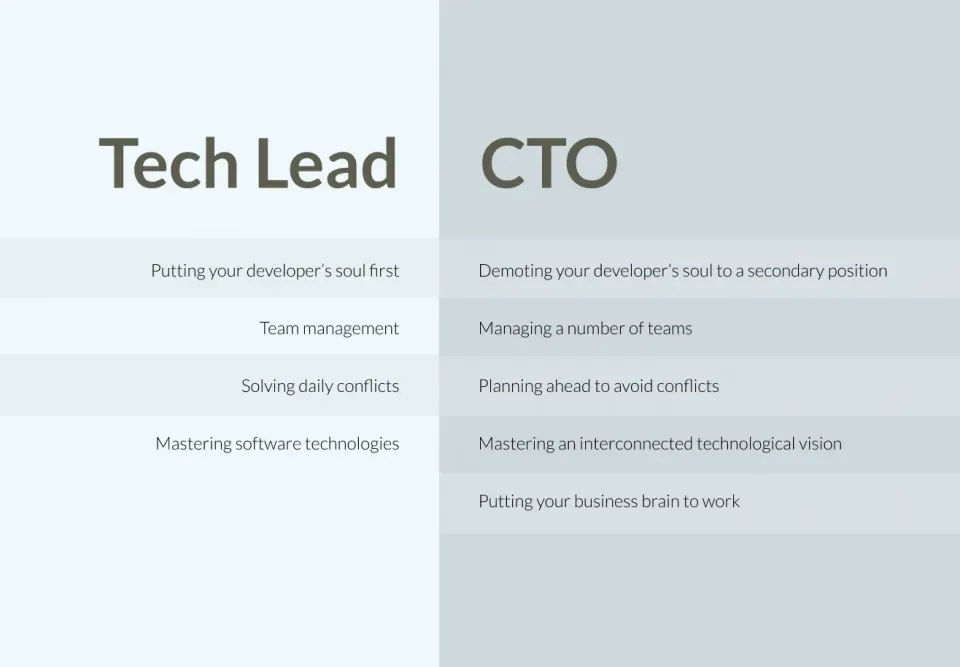
A CTO is responsible for aligning technology with business objectives.
Depending on the company's size and maturity, their responsibilities may include:
- Defining technology strategy and architecture
- Building and leading engineering teams
- Making critical technical investment decisions
- Managing security, scalability, and technical risks
- Aligning product development with business goals
In early-stage startups, a CTO may also write code and manage daily development activities. As the company grows, the role often becomes more strategic.
The key distinction is that a CTO is not simply your most senior developer. The role requires both technical expertise and business judgment.
2Do You Need a CTO to Build an MVP?

If your startup is still developing a Minimum Viable Product (MVP), hiring a full-time CTO may be premature.
At this stage, your priorities are usually straightforward: validate your business idea, launch quickly, collect customer feedback, and control development costs.
What you need most is someone who can help you make sound technical decisions without overengineering the product.
Depending on your situation, this could be:
- An experienced Tech Lead
- A Fractional CTO
- A reliable software development partner with senior technical oversight
For a non-technical founder, having access to experienced technical guidance can be more valuable than immediately building an executive technology team.
However, startups developing highly complex, security-sensitive, or technology-driven products may need dedicated CTO-level leadership much earlier.
3When Should a Startup Hire a Full-Time CTO?
As your business grows, technology decisions become more complex and interconnected.
A full-time CTO may become necessary when:
1. Multiple engineering teams need leadership.
Coordinating teams, defining engineering standards, and maintaining technical consistency require ongoing management.
2. Technology directly drives your competitive advantage.
If your product relies heavily on proprietary technology, your technical strategy becomes a critical business decision.
3. Scalability and security become major priorities.
Growing user bases, complex integrations, and increasing security requirements demand more structured technical governance.
4. Technology investments require executive-level decisions.
When technology spending, technical debt, and architecture choices significantly influence business performance, dedicated leadership becomes increasingly valuable.
At this point, a CTO contributes beyond software development by shaping the company's long-term direction.
4Full-Time CTO vs. Fractional CTO: Which Is Right for You?
A fractional CTO for startups provides experienced technology leadership on a part-time or contract basis.
This model can help early-stage businesses access strategic guidance without immediately committing to a permanent executive hire.
Fractional CTO · Full-Time CTO
Part-time strategic leadership · Continuous executive leadership
Flexible engagement · Long-term commitment
Suitable for defined technical challenges · Suitable for ongoing organizational complexity
Lower initial commitment · Greater leadership capacity and availability
Neither option is universally better.
The right choice depends on how frequently your business needs senior technical decisions and how much leadership responsibility the role must carry.
5Three Questions Founders Should Ask Before Hiring a CTO
Before starting your recruitment process, ask yourself:
1. What technology problems are we actually trying to solve?
Do you need better development execution, stronger architecture, or long-term technology strategy?
2. Do we need continuous leadership or occasional expert guidance?
A full-time CTO makes sense when leadership responsibilities require daily involvement.
3. Can our current business stage justify the investment?
Consider your budget, product roadmap, engineering capacity, and future growth plans.
6Final Thoughts: Hire for the Problem, Not the Title
Hiring a CTO should never be about making your startup look more established.
It should be about ensuring your business has the technical leadership required to grow sustainably.
Sometimes, that means hiring a full-time CTO. Sometimes, a Fractional CTO or experienced Tech Lead is enough.
The real question isn't "Should we hire a CTO?" It's "What technology leadership does our business actually need right now?"
Getting that decision right can save valuable time, resources, and costly technical mistakes.