Best Headless CMS for Business Websites: Strapi vs Sanity vs Contentful
Technology Knowledge
A good CMS should make your team's work easier, not give them another complicated system to figure out.
You've decided to build your website with a headless CMS. Great! But now comes another question: which one should you choose?
If you've done some research, you've probably come across three popular names: Strapi, Sanity, and Contentful. They all promise flexibility, scalability, and better content management. And honestly, they're all pretty good at what they do.
The tricky part? They're built with different priorities in mind.
A CMS that works beautifully for a content-heavy marketing website might not be the best choice for a custom business platform. And the one with the lowest subscription fee could end up costing more to maintain.
So, rather than comparing endless feature lists, let's look at what actually matters when choosing a CMS for your business.
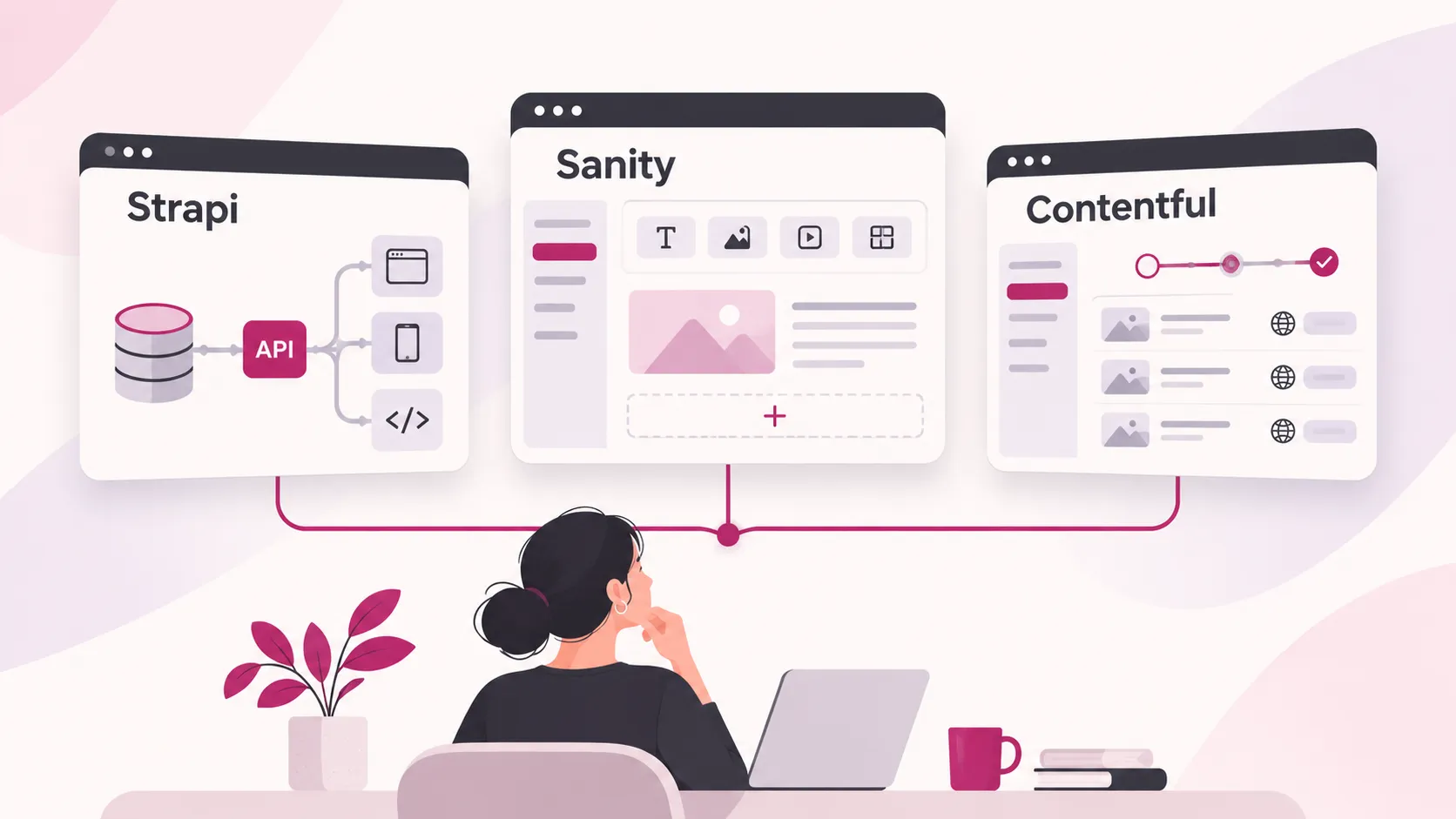
1Strapi vs Sanity vs Contentful: A Quick Comparison
Before diving deeper, here's how these three platforms compare.
| Strapi | Sanity | Contentful | |
|---|---|---|---|
| Biggest strength | Backend control & customization | Flexible content workflows | Enterprise content operations |
| Hosting | Self-hosted or managed cloud | Managed cloud | Managed cloud |
| Free option | Yes | Yes | Yes |
| Paid starting point | $35/month for cloud hosting | $15/seat/month | $300/month |
| Ideal use case | Custom websites & integrations | Content-driven websites | Large-scale content operations |
| Maintenance | Higher if self-hosted | Managed infrastructure | Managed infrastructure |
** Pricing checked in November 2026. Plans have different inclusions, and these figures don't represent the total cost of building a website.
At a glance, Strapi gives you more backend control, Sanity focuses on a flexible content experience, and Contentful offers tools for organizations managing content at scale.
But which one makes sense for your business?
2Getting to Know Each Platform
2.1. Strapi: Freedom Comes with Responsibility
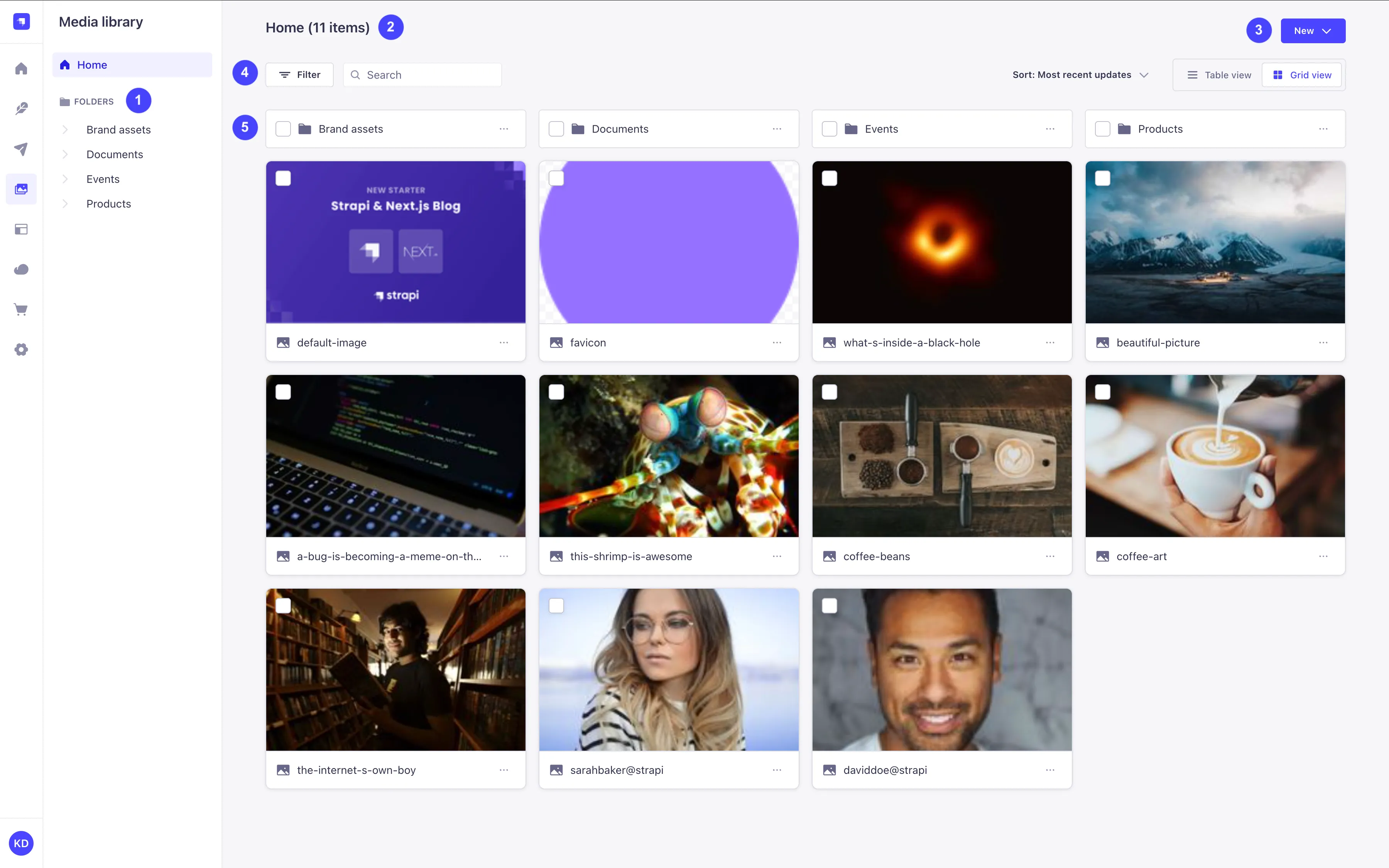
Let's say your company is building a website that needs to connect with a CRM, an internal customer portal, and maybe a mobile app in the future.
This is where Strapi becomes an interesting option.
Strapi is an open-source headless CMS that lets developers customize the backend, create APIs, and manage the database and hosting environment. Instead of adapting your business around a predefined system, your development team has more freedom to build what you actually need.
It also offers a free Community Edition, which sounds attractive for businesses trying to control their technology budget.
But there's a catch.
If you self-host Strapi, someone needs to handle server maintenance, security updates, backups, and deployments. And while Strapi provides a content editing interface, more advanced editorial features may require paid plans or additional development.
So, is Strapi a good choice?
We'd consider Strapi for businesses that need customized functionality, control over their infrastructure, and have access to reliable technical support.
2.2. Sanity: When Content Is Part of Your Daily Business
Now imagine a marketing team running several campaigns every month. They're constantly publishing blog posts, updating landing pages, changing product information, and preparing content for different channels.
They don't want to contact a developer every time they need to change a headline.
That's the kind of workflow where Sanity can shine.
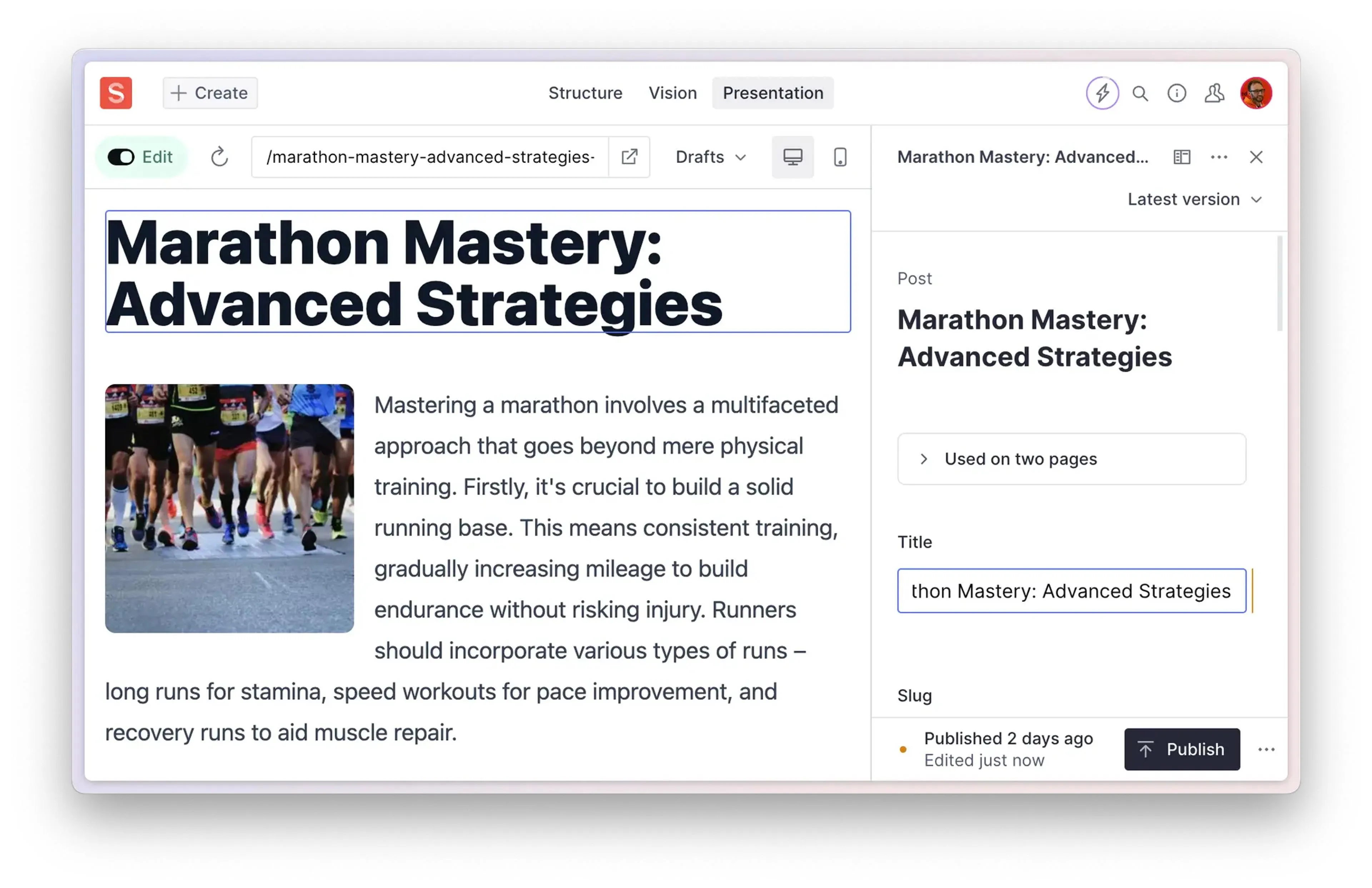
Sanity uses a structured content approach, allowing information to be organized into reusable pieces rather than isolated pages. Its customizable editing interface, Sanity Studio, also supports collaboration and visual editing.
For example, your marketing team could update product information in one place and reuse it across different pages or applications. With visual editing properly configured, editors can preview changes and navigate directly to the content they want to update.
Of course, this experience still needs to be designed and implemented. Sanity isn't a magic tool that automatically creates the perfect CMS for every marketing team.
We'd put Sanity on the shortlist for businesses that publish frequently and want their content team to work independently.
2.3. Contentful: Managing Content Across Bigger Organizations
Imagine your company operates in five countries. Each market has its own marketing team, but everyone needs to follow the same brand guidelines and content standards.
Suddenly, content management isn't just about writing and publishing anymore.
You need clear permissions, localization, collaboration, and publishing processes. Otherwise, managing content across teams can quickly become messy.
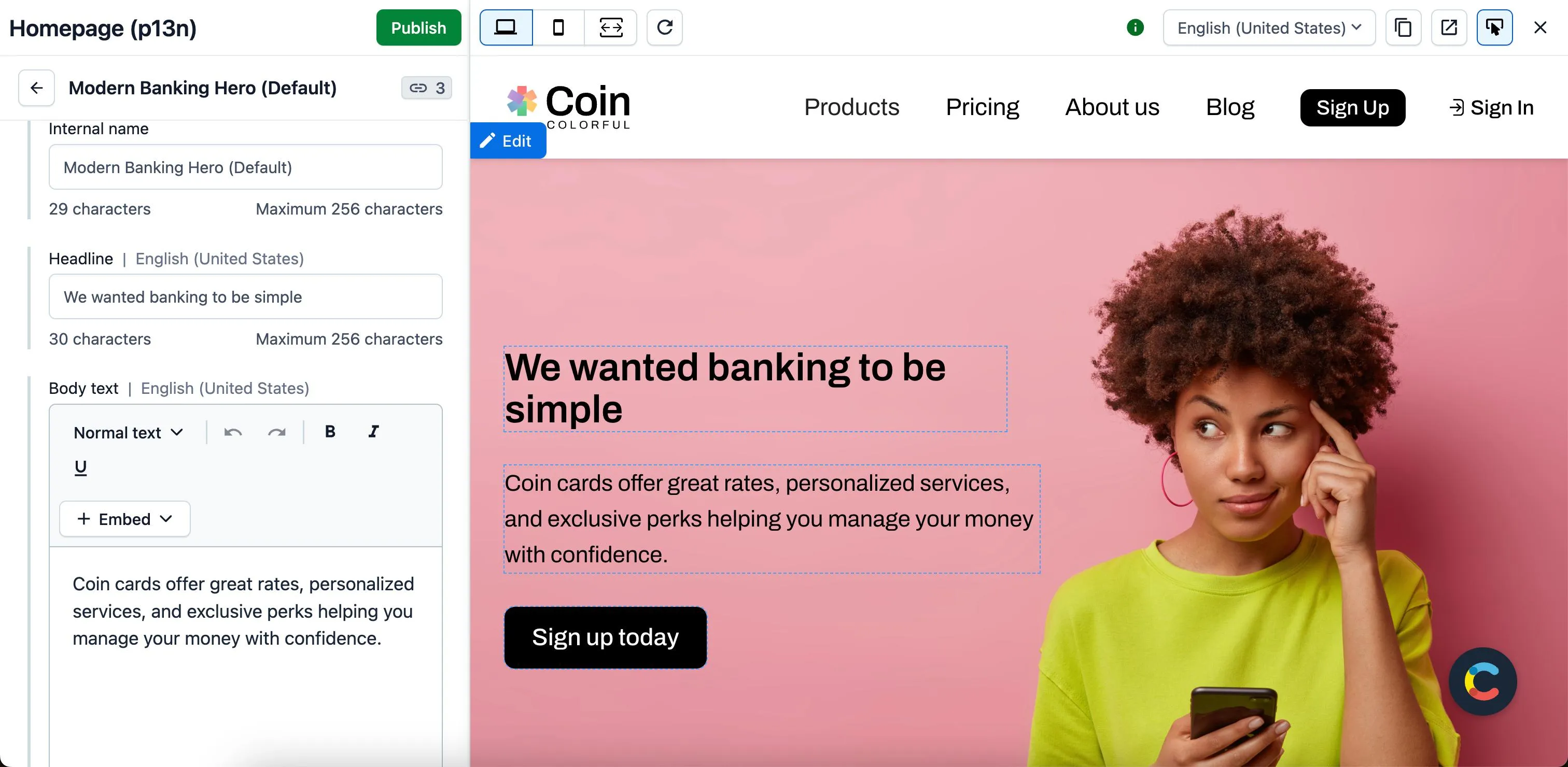
Contentful is built to support these kinds of requirements, offering structured content management, collaboration tools, APIs, and advanced governance options for larger organizations.
It also offers a visual preview experience, so editors aren't limited to working with content fields without seeing how they'll appear on the website.
However, there's an important consideration: pricing. Contentful's Lite plan starts at $300 per month, while advanced enterprise capabilities may require custom pricing.
We'd explore Contentful when content governance, multiple markets, and coordination between teams are becoming genuine business challenges.
For a small company website, though, it might be more than you need.
3The Real Test: Can Your Team Actually Use It?
Here's something we believe doesn't get enough attention in CMS comparisons.
Developers usually evaluate architecture, APIs, and customization. Business owners think about budget and scalability. But what about the people who will use the CMS every single day?
Let's take a simple example.
Your marketing team is launching a new campaign tomorrow. They need to update the homepage banner, create a landing page, add a promotional message, and preview everything before publishing.
Can they do that without asking a developer for help?
All three platforms support content editing, but the experience your team gets depends heavily on how the CMS was implemented.
With Strapi, developers can create flexible content structures and reusable components. However, a poorly designed content model can leave editors navigating dozens of confusing fields.
Sanity allows developers to customize the editing interface around specific workflows. Visual editing can make updates more intuitive, although it requires proper frontend integration.
Contentful provides a structured editorial interface with content previews and collaboration features. It's particularly useful when different teams need defined responsibilities and publishing processes.
None of these platforms automatically guarantees a better editing experience.
Our advice? Before choosing a CMS, ask your development partner to demonstrate three everyday tasks: editing an existing page, creating a new landing page, and previewing changes.
If your marketing team struggles with these basic actions, the CMS probably needs a better implementation, regardless of how powerful the technology is.
4Let's Talk About Money: Free Doesn't Always Mean Cheaper
Pricing is often the first thing businesses compare, but a CMS subscription is only one piece of the puzzle.
Here's a quick look at the published entry-level options:
- Strapi: Free Community Edition for self-hosting. Strapi Cloud hosting starts at $35 per project/month, while paid CMS functionality is priced separately.
- Sanity: Free tier available. Growth starts at $15 per seat/month, with potential additional usage costs.
- Contentful: Free tier available. Lite starts at $300/month, with Enterprise pricing available on request.
Now imagine two businesses.
Business A chooses free, self-hosted Strapi. They don't pay CMS license fees, but they need a developer to maintain the server, manage updates, and troubleshoot issues.
Business B chooses a managed CMS. They pay a monthly subscription, but don't need to manage the content database infrastructure themselves.
Which business spends less?
It depends.
The first might save money with an existing technical team. The second might reduce operational overhead by paying for managed infrastructure.
And both still need frontend hosting, integrations, security considerations, and ongoing website maintenance.
That's why we recommend looking at the total cost of ownership, not just monthly subscription fees.
A good technology decision should make financial sense over the next few years, not just on launch day.
5Which Headless CMS Would We Recommend?
There's no universal winner here. But based on different business scenarios, here's where we'd start.
For startups building customized digital products: Strapi is worth considering, especially if your website connects with custom applications or internal systems. The control it offers can be valuable when your technical requirements go beyond managing content.
For growing companies with active marketing teams: Sanity is a strong candidate. Its structured content model and customizable editorial experience can make life easier for teams publishing across multiple channels.
For enterprise organizations with complex workflows: Contentful deserves attention. Advanced governance, localization, and collaboration become more valuable as the number of teams and markets grows.
For small businesses that only need a simple website: Here's a different suggestion. You might not need any of these three platforms.
If you're building a corporate website with a few service pages and occasional blog posts, WordPress or a lightweight website architecture might be more practical.
We've explored this in our previous articles, Do You Really Need a Headless CMS? and Headless CMS vs WordPress.
Sometimes, less technology means fewer problems to solve.
6What About SEO and Future Growth?
One common misconception is that choosing a modern headless CMS automatically improves website performance and SEO.
Unfortunately, it doesn't work that way.
All three platforms can support SEO-friendly websites. But Google doesn't rank your website higher simply because you use Strapi, Sanity, or Contentful.
Your results depend on the overall implementation: frontend rendering, page speed, metadata, structured data, internal linking, and content quality.
The same applies to scalability.
A CMS might support millions of content entries, but that doesn't mean your website is automatically prepared for millions of visitors. Frontend architecture, caching, infrastructure, and integrations still matter.
So instead of asking which CMS is the most powerful, ask which one can support your realistic growth plans without creating unnecessary complexity.
7Final Thoughts: Choose What Makes Sense, Not What Sounds Impressive
Strapi, Sanity, and Contentful are all capable headless CMS platforms. Each can be a great choice when used for the right reasons.
But technology decisions shouldn't start with a feature list.
Start with your business goals, your team's daily workflows, and the resources available to maintain your website. Then find the technology that fits.
At RoseRebel Digital, that's how we believe website development should work: understand the business first, then choose the technology.
Planning a new website or thinking about switching your CMS?
Let's talk about what your business actually needs.